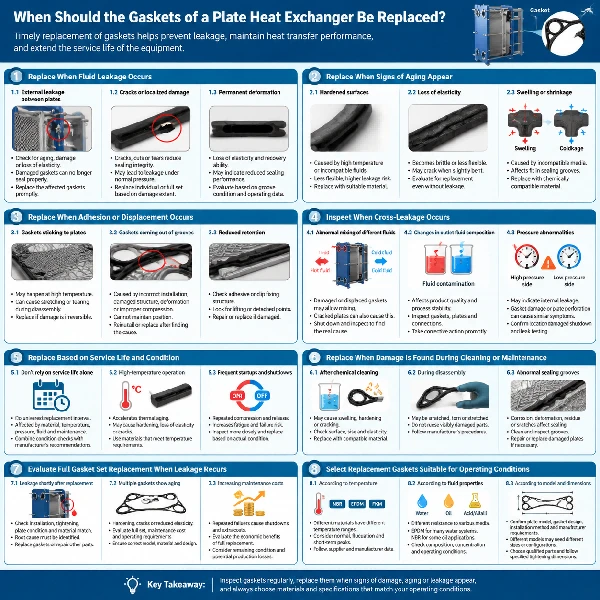
1. Gasket Replacement When Fluid Leakage Occurs
1.1 External Leakage Between Plates
If liquid leaks from the joints between the plates, the gaskets should be inspected for aging, damage, or loss of elasticity. Damaged gaskets may no longer provide a reliable seal, allowing fluid to escape from the plate pack. If the leakage is confirmed to be caused by gasket damage, the affected gaskets should be replaced promptly.
1.2 Cracks or Localized Damage
After long-term operation, gaskets may develop cracks, cuts, or localized tears. These defects reduce the integrity of the sealing material and may lead to leakage under normal operating pressure. If visible damage is found, determine whether individual gaskets or the entire gasket set should be replaced based on the extent of the damage and the equipment design.
1.3 Permanent Gasket Deformation
Gaskets may gradually lose their elasticity and recovery ability after prolonged exposure to compression and temperature. During shutdown inspections, noticeably flattened or deformed gaskets that cannot return to their original shape may indicate reduced sealing performance. Their replacement should be evaluated based on the condition of the sealing grooves, the specified tightening dimensions, and the operating conditions.
2. Gasket Replacement When Signs of Aging Appear
2.1 Hardened Gasket Surfaces
Long-term exposure to high temperatures or incompatible fluids can cause gasket materials to harden and lose elasticity. Hardened gaskets may not conform properly to the plate surfaces, increasing the risk of leakage when pressure fluctuates. If hardening affects sealing performance, the gaskets should be replaced with materials suitable for the operating conditions.
2.2 Loss of Elasticity
Gaskets should maintain sufficient flexibility and resilience to provide effective sealing when compressed between plates. If a gasket becomes brittle, loses its flexibility, or develops cracks when slightly bent, its material properties may have deteriorated significantly. Even if no leakage has occurred, such gaskets should be evaluated for replacement to reduce the risk of future failure.
2.3 Swelling or Shrinkage
When gasket materials come into contact with incompatible fluids, they may swell, shrink, or undergo other dimensional changes. These changes can affect the fit of the gaskets in their sealing grooves and lead to local sealing failures. If material incompatibility is confirmed, the gaskets should be replaced with materials that offer better chemical resistance.
3. Gasket Replacement When Adhesion or Displacement Occurs
3.1 Gaskets Sticking to Plate Surfaces
After prolonged operation at elevated temperatures, some gaskets may stick to the plate surfaces. During disassembly, they may stretch, tear, or suffer other damage. If the damage cannot be repaired, the affected gaskets should be replaced to ensure reliable sealing after reassembly.
3.2 Gaskets Coming Out of Their Grooves
Gaskets may become displaced because of incorrect installation, damaged fixing structures, material deformation, or improper plate compression. A displaced gasket cannot maintain its intended position, increasing the risk of leakage or fluid cross-contamination. The cause should be identified first, and the gasket should then be reinstalled or replaced according to its actual condition.
3.3 Reduced Gasket Retention
For gaskets secured by adhesive or clip-on systems, the fixing structure should be inspected regularly. Local lifting, detached fixing points, or difficulty fitting the gasket securely into its groove may compromise installation reliability. If the gasket or its fixing structure is damaged, repair or replacement should follow the manufacturer's recommendations.
4. Gasket Inspection When Cross-Leakage Occurs
4.1 Abnormal Mixing of Different Fluids
In a plate heat exchanger, the plates and gaskets separate the hot and cold fluids to prevent direct mixing under normal operating conditions. Damaged or displaced gaskets may allow fluids from different channels to mix, although cracked or perforated plates can cause similar problems. If abnormal mixing is suspected, the equipment should be shut down and inspected to identify the actual cause.
4.2 Changes in Fluid Composition at the Outlet
In processes with strict fluid quality requirements, gasket failure may cause cross-contamination between different flow channels. For example, in food processing and chemical production, fluid mixing may affect product quality and process stability. If abnormal fluid composition is detected, inspect the gaskets, plates, and relevant connections, and take corrective action promptly.
4.3 Pressure Abnormalities Accompanied by Cross-Leakage
Unexpected pressure changes between the hot and cold sides may indicate internal leakage. Damaged gaskets can allow fluid to pass from the high-pressure side to the low-pressure side, but plate perforation may produce similar symptoms. The fault location should be confirmed through appropriate shutdown inspections and leak testing before deciding whether gasket replacement is necessary.
5. Gasket Replacement Based on Service Life and Condition
5.1 Do Not Rely on Service Life Alone
There is no single replacement interval that applies to all plate heat exchanger gaskets. Their service life varies depending on material type, operating conditions, and maintenance practices. Operating temperature, fluid corrosiveness, pressure fluctuations, and startup and shutdown frequency all affect gasket aging, so condition inspections should be combined with the manufacturer's recommended maintenance schedule.
5.2 Gaskets Operating at High Temperatures
Continuous exposure to high temperatures can accelerate thermal aging in certain elastomeric materials. Over time, gaskets may harden, lose elasticity, or develop cracks. Gaskets used in high-temperature applications should be inspected carefully, and replacement materials must meet the actual operating temperature requirements.
5.3 Gaskets in Equipment with Frequent Startups and Shutdowns
Frequent startups and shutdowns expose gaskets to repeated temperature and pressure changes. Repeated compression and relaxation may accelerate material fatigue and increase the risk of sealing failure. Equipment with frequent operating cycles should be inspected more closely, with replacement scheduled according to the actual condition of the gaskets.
6. Gasket Replacement When Damage Is Found During Cleaning or Maintenance
6.1 Material Damage After Chemical Cleaning
If the cleaning solution is incompatible with the gasket material, it may cause swelling, hardening, cracking, or other changes in material properties. After cleaning, inspect the gasket surfaces, dimensions, and elasticity for signs of damage. If irreversible damage is found, replace the gaskets with materials compatible with both the cleaning solution and the process fluid.
6.2 Gasket Damage During Disassembly
Gaskets may be scratched, torn, or stretched during plate removal if unsuitable tools are used or excessive force is applied. Before reassembly, inspect each gasket carefully and do not reuse visibly damaged components. Follow the manufacturer's disassembly and installation procedures to minimize unnecessary damage.
6.3 Abnormal Conditions in the Sealing Grooves
Reliable sealing depends not only on gasket condition but also on the integrity of the sealing grooves and plate surfaces. Corrosion, deformation, residue, or scratches in the grooves may prevent even a new gasket from sealing properly. Before installing replacement gaskets, clean and inspect the grooves, and repair or replace damaged plates when necessary.
7. Evaluate Full Gasket Set Replacement When Leakage Recurs
7.1 Leakage Shortly After Gasket Replacement
If leakage returns shortly after new gaskets have been installed, check the installation quality, tightening dimensions, plate condition, and gasket material compatibility. Repeated leakage does not necessarily mean that the gaskets themselves are defective; plate deformation or incorrect tightening may also be responsible. The root cause must be identified before deciding whether to replace the gaskets again or repair other components.
7.2 Multiple Gaskets Showing Signs of Aging
When a plate heat exchanger has been in service for a long time and multiple gaskets show hardening, cracks, or reduced elasticity, replacing only the visibly damaged gaskets may not sufficiently reduce the risk of future leakage. Evaluate the condition of the entire gasket set, maintenance costs, and operating requirements to determine whether full replacement is appropriate. Ensure that all replacement gaskets match the equipment specifications in terms of model, material, and design.
7.3 Increasing Maintenance Costs
If gasket-related failures repeatedly cause unplanned shutdowns, labor costs, cleaning expenses, and reassembly costs may gradually increase. In such cases, the economic benefits of replacing the entire gasket set should be evaluated. Full replacement is not always necessary, so decisions should consider the condition of the remaining gaskets, spare parts costs, and potential production losses.
8. Selecting Replacement Gaskets Suitable for Operating Conditions
8.1 Select Materials According to Operating Temperature
Different gasket materials have different temperature resistance ranges. Common materials include NBR (nitrile rubber), EPDM (ethylene propylene diene monomer rubber), and FKM (fluoroelastomer). Selection should consider the normal operating temperature, temperature fluctuations, and possible short-term temperature peaks, with the manufacturer's specifications used as the final reference.
8.2 Select Materials According to Fluid Properties
Different gasket materials have different levels of resistance to water, oils, acids, alkalis, and other chemical fluids. For example, EPDM is commonly used in many water-based applications, while NBR is often suitable for certain oil-based applications; however, suitability depends on the specific fluid and operating temperature. Before selecting a material, verify the fluid composition, concentration, and operating conditions to prevent premature gasket failure caused by chemical incompatibility.
8.3 Select the Correct Model and Dimensions
Before replacing gaskets, confirm the plate model, gasket design, installation method, and equipment manufacturer's requirements. Plate heat exchangers that look similar may use gaskets with different dimensions or configurations. Choose reliable replacement parts that match the original equipment specifications and follow the specified tightening dimensions during installation.
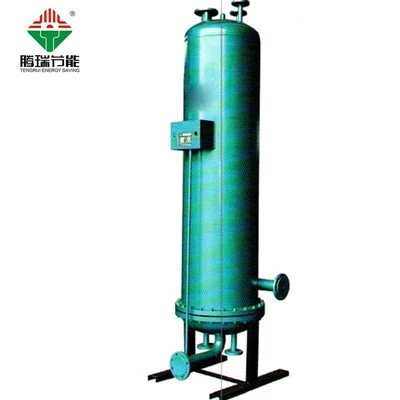
If you want to know more about heat exchanger units or are interested in purchasing, please send an email to 9988xiaoshuai@gmail.com, we will reply you in time after seeing the message!
Professional team
Our company is equipped with a high-quality after-sales service team with technical personnel as the core, and will provide timely feedback upon receiving service information notifications from users
7x24 hours delivery
Our company provides free technical support for the products we sell and organizes technical training for relevant personnel.