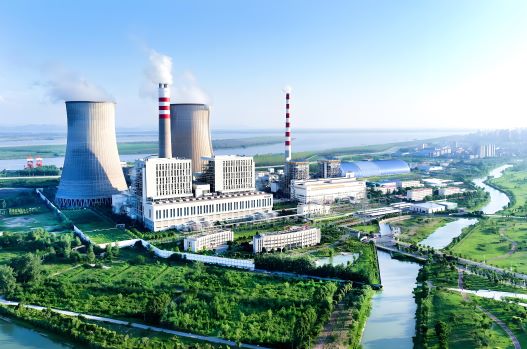
1. Main Functions of Plate Heat Exchangers in District Heating Systems
1.1 Heat Transfer Between Primary and Secondary Heating Networks
In district heating systems, the heat source typically delivers high-temperature water to different heat exchange stations through the primary heating network. Plate heat exchangers transfer heat from the primary-side water to the secondary-side circulation water, raising the secondary water temperature to the level required for building heating. The two fluids flow through separate channels without direct contact, ensuring hydraulic separation between the heating networks.
1.2 Isolation of Heating Systems with Different Operating Pressures
The primary and secondary heating networks usually operate under different pressure conditions. Plate heat exchangers separate these two circulation systems and prevent the high pressure of the primary network from being directly transmitted to the internal building piping system. Proper equipment pressure design helps improve system safety and operational stability.
1.3 Meeting the Heating Requirements of Different Buildings
Different buildings may have different requirements for heating temperature, flow rate, and operating pressure. Plate heat exchangers can be selected according to actual operating conditions to provide suitable hot water for residential buildings, offices, shopping centers, and industrial facilities. By adjusting the primary-side flow rate and temperature, the system can accommodate different heating demands.
2. Typical Applications of Plate Heat Exchangers in District Heating Systems
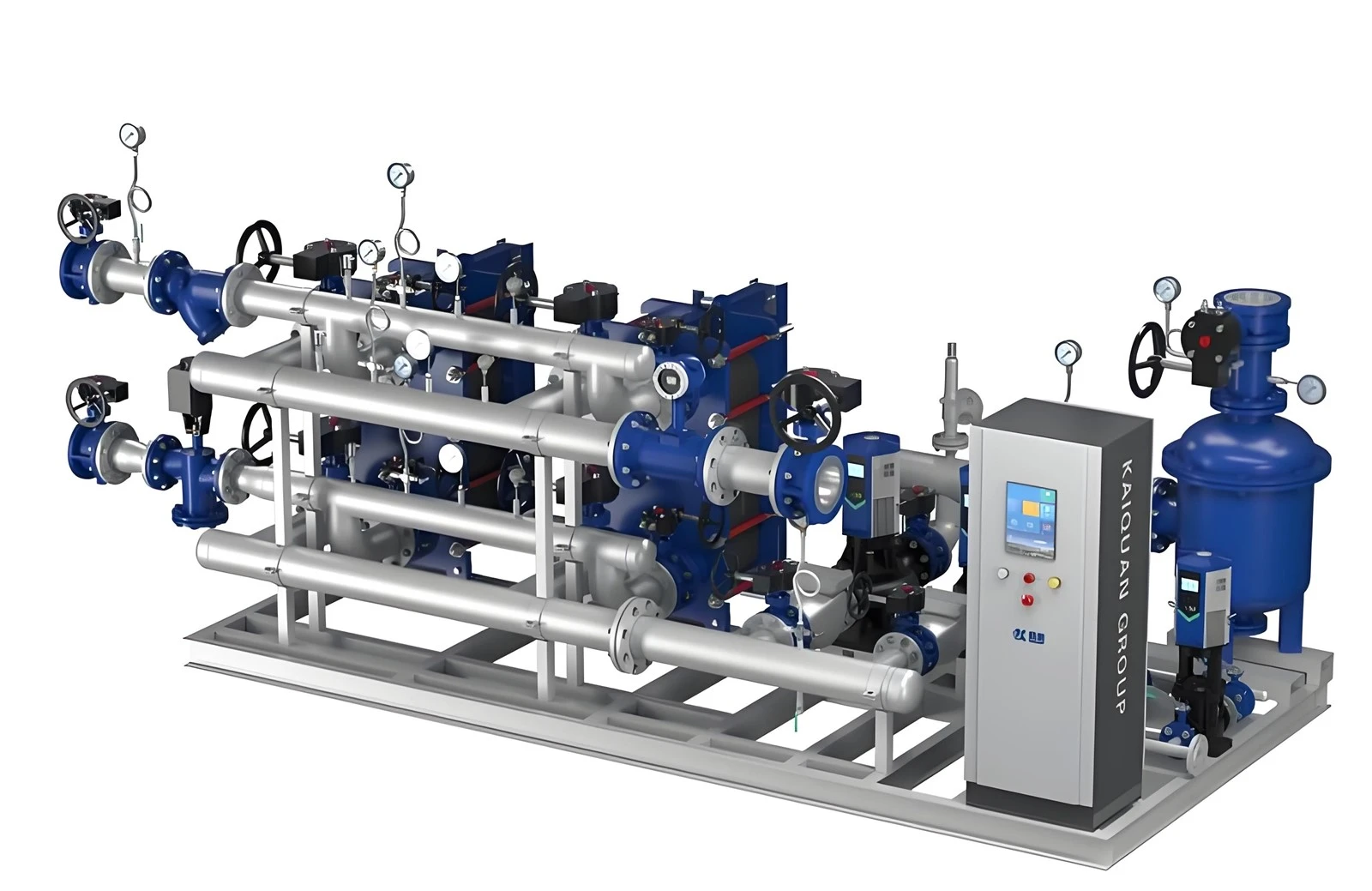
2.1 Urban District Heating Stations
In urban district heating systems, plate heat exchangers are commonly installed in centralized heating stations. They transfer heat from the primary network to the secondary network, supplying hot water to surrounding buildings. Compared with direct connection systems, heat exchange stations provide hydraulic separation between networks and allow independent operation and management.
2.2 Residential Community Heating Systems
In residential communities, plate heat exchangers are generally installed in centralized heating rooms. They transfer heat from the municipal heating network to the internal heating pipelines of the community, meeting the heating requirements of different buildings and households. When combined with circulation pumps, control valves, and automatic control systems, they can regulate the heat supply according to outdoor temperatures and actual heating loads.
2.3 Heating Systems for Commercial Buildings and Public Facilities
Shopping centers, hospitals, schools, and office buildings often have relatively complex heating requirements. Plate heat exchangers can provide heat transfer for different building zones or independent heating circuits. By installing multiple heat exchange circuits, the system can achieve separate temperature control and heating management for different areas.
2.4 Regional Energy Stations and Integrated Energy Systems
In regional energy stations, plate heat exchangers can connect boilers, heat pumps, waste heat recovery units, and district heating networks. They transfer heat generated by different heat sources into the heating system, improving energy utilization flexibility. In multi-source heating projects, properly configured heat exchangers can coordinate the operation of different heat sources.
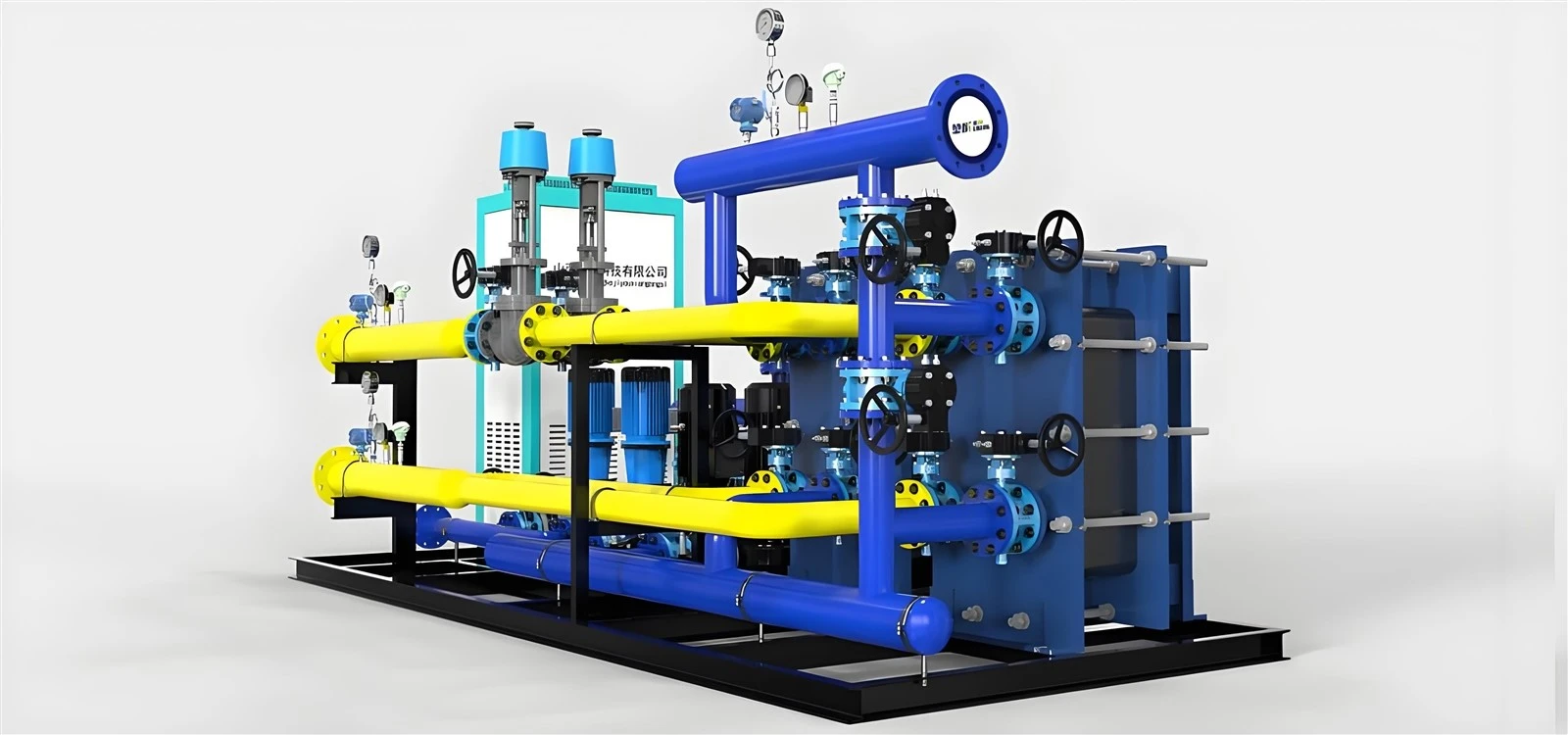
3. Working Principles of Plate Heat Exchangers in District Heating Systems
3.1 Primary-Side Hot Water Inlet
High-temperature water from the primary heating network enters one side of the plate heat exchanger through the inlet connection. It flows through the channels between the plates and transfers its heat to the metal plates. After heat exchange, the primary-side water leaves the heat exchanger at a lower temperature and returns to the heat source system.
01
3.2 Heat Absorption by Secondary-Side Circulation Water
Low-temperature return water from the secondary heating network enters the heat exchanger through the other inlet connection. It flows through the channels adjacent to the primary-side channels and absorbs heat through the metal plates. The heated water then enters the building heating network to supply heat to radiators, underfloor heating systems, or other terminal equipment.
02
3.3 Improved Heat Transfer Through Counter-Current Flow
Plate heat exchangers in district heating systems commonly operate in a counter-current flow arrangement. The primary-side hot water and secondary-side circulation water flow in opposite directions, helping maintain a favorable temperature difference along the heat exchanger. Under otherwise identical conditions, counter-current flow generally provides better temperature utilization than parallel-flow arrangements.
03
3.4 Enhanced Heat Transfer Through Plate Design
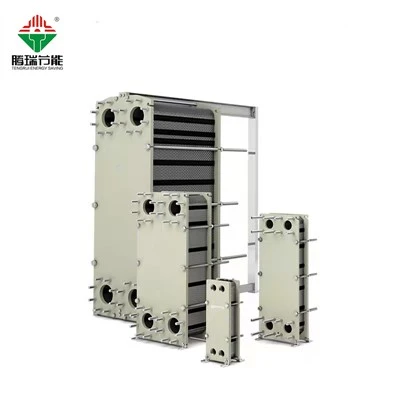
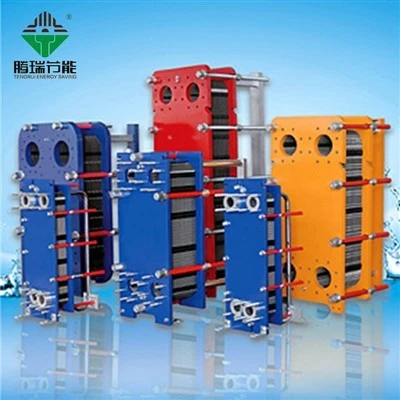
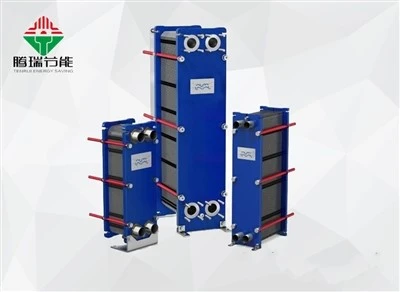
The metal plates of a plate heat exchanger usually feature corrugated surfaces that increase fluid turbulence and provide an effective heat transfer area. The fluid flows along these corrugated surfaces, promoting mixing and improving convective heat transfer. The narrow channels formed between adjacent plates also give plate heat exchangers a high heat transfer capacity relative to their overall volume.
04
4. Main Advantages of Plate Heat Exchangers in District Heating Systems
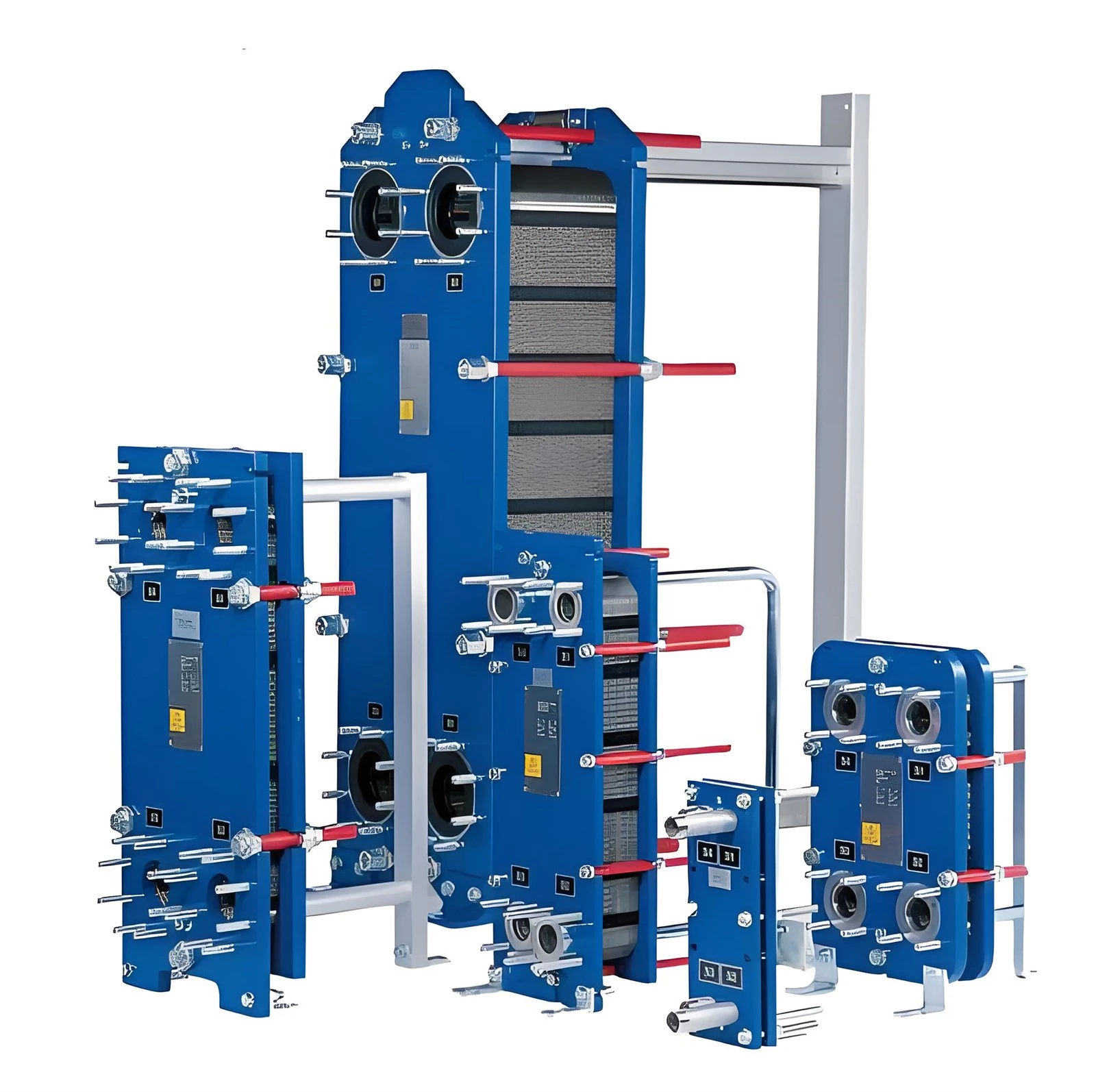
4.1 High Heat Transfer Efficiency
Plate heat exchangers use thin metal plates as the heat transfer medium, providing high heat transfer efficiency. The corrugated plate design promotes fluid turbulence and reduces the influence of thermal boundary layers on heat transfer. Under suitable temperature and flow conditions, they can achieve efficient thermal energy transfer.
4.2 Compact Structure and Small Footprint
Compared with traditional shell-and-tube heat exchangers, plate heat exchangers generally have a more compact structure. For comparable heat transfer duties, they often require less installation space, making them suitable for district heating stations and equipment rooms with limited space. Their compact design also simplifies equipment installation and layout.
4.3 Easy Maintenance and Cleaning
Demountable plate heat exchangers can be opened by loosening the clamping bolts, allowing operators to inspect the plates and gaskets. When fouling or blockage occurs, mechanical or chemical cleaning can be performed according to the type and severity of contamination. Regular maintenance helps restore heat transfer performance and extend equipment service life.
4.4 Flexible Operating Adjustment
Plate heat exchangers can operate together with temperature sensors, control valves, and automatic control systems. The system can adjust the primary-side hot water flow rate according to changes in heating demand, thereby controlling the secondary-side outlet temperature. Proper automatic regulation helps reduce unnecessary heat consumption.
5. Selection Requirements for Plate Heat Exchangers in District Heating Systems
5.1 Determine Heat Transfer Capacity Based on Actual Heating Loads
The first step in equipment selection is to determine the design heating load of the building or heating area, generally expressed in kW or MW. The required heat transfer area is calculated based on the inlet and outlet temperatures, design flow rates, and fluid properties on both sides. The selected equipment should meet the maximum design heating load while allowing an appropriate design margin.
01
5.2 Determine Operating Pressure and Design Temperature
The primary and secondary heating networks may have significantly different operating pressures and temperatures. During equipment selection, it is necessary to identify the normal operating pressure, design pressure, and maximum operating temperature on both sides. The design pressure and temperature ratings of the heat exchanger must meet the requirements of the actual operating conditions and applicable standards.
02
5.3 Select Suitable Plate Materials
Plate materials should be selected according to the circulating water quality, chloride concentration, corrosiveness, and operating temperature. Common materials include 304 and 316 stainless steel. For conventional district heating water systems, the appropriate stainless steel grade can be selected based on water quality conditions. If the fluid is highly corrosive, more corrosion-resistant materials, such as titanium, may need to be evaluated.
03
5.4 Select Appropriate Flow Channels and Heat Transfer Area
The number of plates, flow channel arrangement, and fluid distribution design all affect heat transfer capacity and pressure drop. During selection, both heat transfer efficiency and the circulation pump's available head should be considered to avoid excessive pressure losses and increased operating energy consumption. Sufficient space should also be reserved for future heating load increases, cleaning, and equipment maintenance.
04
6. Operating Issues to Consider in District Heating Systems
6.1 Scale Formation and Impurity Deposition
Calcium and magnesium ions, rust, and other suspended particles in circulating water may accumulate on the plate surfaces. Fouling increases thermal resistance, reduces heat transfer efficiency, and may eventually cause channel blockage. Appropriate filtration equipment should be installed according to water quality conditions, and the heat exchanger should be inspected and cleaned regularly.
6.2 Abnormal Flow Rate and Pressure
Insufficient flow on either the primary or secondary side can reduce the heat transfer capacity of the equipment. Excessive flow may increase pressure drop and circulation pump loads, while the allowable fluid velocity must also be considered. Operators should regularly monitor inlet and outlet pressures, temperatures, and flow rates to identify abnormal operating conditions promptly.
6.3 Gasket Aging and Leakage
Demountable plate heat exchangers generally use rubber gaskets to prevent fluid leakage. After long-term exposure to temperature changes, pressure fluctuations, and different operating media, gaskets may become aged, hardened, or lose their elasticity. If external leakage or internal cross-contamination between the two fluids occurs, the equipment should be shut down and inspected. Damaged gaskets should be replaced when necessary.
6.4 Regular Inspection of Equipment Operating Conditions
During long-term operation, attention should be paid to inlet and outlet temperatures, pressure drop, and overall heat transfer performance. If the secondary-side outlet temperature decreases significantly under the same operating conditions, possible causes include fouling, insufficient flow, or other operating problems. Establishing regular inspection and maintenance records helps identify potential faults and reduce unexpected downtime.
7. Energy-Efficient Operation of Plate Heat Exchangers in District Heating Systems
7.1 Optimize Primary-Side Water Supply Temperature
The primary-side supply temperature directly affects the heat transfer temperature difference and the secondary-side outlet temperature. While meeting users' heating requirements, the primary-side supply temperature can be adjusted according to outdoor temperatures and actual heating loads. Avoiding unnecessarily high supply temperatures helps reduce energy consumption at the heat source.
01
7.2 Properly Control Circulation Water Flow Rate
The secondary-side circulation water flow rate should match the actual heating load of the buildings. Variable-frequency circulation pumps and automatic control systems can adjust the flow rate according to heating demand. Proper flow control helps reduce pump energy consumption while preventing insufficient heating capacity caused by inadequate flow.
02
7.3 Reduce Operating Pressure Losses
The pressure drop across a plate heat exchanger affects the energy consumption of circulation pumps. During equipment selection, the heat transfer area, flow channel design, and allowable pressure drop should be considered together. Excessive hydraulic resistance should be avoided when pursuing higher heat transfer performance. Keeping the flow channels clean also helps control pressure losses.
03
7.4 Strengthen Automatic Control of the Heating System
Temperature sensors, pressure sensors, and automatic control valves can monitor the operating conditions of plate heat exchangers in real time. The control system can automatically adjust hot water flow rates and supply temperatures according to changes in heating demand. Proper automation helps reduce manual operating errors and improve overall energy efficiency.
04
8. Maintenance and Management of Plate Heat Exchangers in District Heating Systems
8.1 Establish a Regular Maintenance Schedule
A maintenance schedule should be developed based on operating hours, water quality, and actual equipment conditions. Plates, gaskets, connecting pipelines, and clamping bolts should be inspected regularly to ensure reliable operation. For heat exchange stations operating continuously over long periods, particular attention should be paid to changes in equipment performance.
8.2 Clean the Equipment According to Fouling Conditions
When heat transfer efficiency decreases or pressure drop increases significantly, the equipment should be inspected for scale formation and channel blockage. For demountable plate heat exchangers, mechanical cleaning or appropriate chemical cleaning methods can be used. Cleaning agents must be compatible with the plate and gasket materials to prevent corrosion or damage to sealing components.
8.3 Ensure Proper Operation During Winter
Winter is the main operating season for district heating systems, and plate heat exchangers often operate continuously for extended periods. Operators should closely monitor inlet and outlet temperatures, flow rates, and pressure changes on both sides, and promptly address any abnormal conditions. During shutdowns, maintenance, or operation in low-temperature environments, appropriate antifreeze measures should also be taken according to the equipment design and site conditions.
8.4 Replace Damaged Components Promptly
If plates suffer from severe corrosion, deformation, or cracking, they should be inspected and replaced promptly to prevent risks to equipment safety. Gaskets showing obvious aging, cracking, or loss of elasticity should also be replaced when necessary. Using replacement parts that meet the equipment specifications helps maintain sealing performance and heat transfer efficiency.
If you want to know more about heat exchanger units or are interested in purchasing, please send an email to 9988xiaoshuai@gmail.com, we will reply you in time after seeing the message!
Professional team
Our company is equipped with a high-quality after-sales service team with technical personnel as the core, and will provide timely feedback upon receiving service information notifications from users.
7x24 hours delivery
Our company provides free technical support for the products we sell and organizes technical training for relevant personnel.