I. Core Foundation: Core Structure of the Equipment
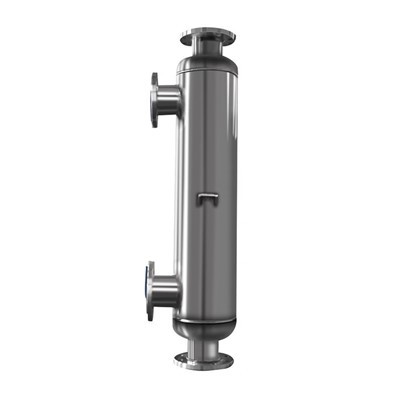
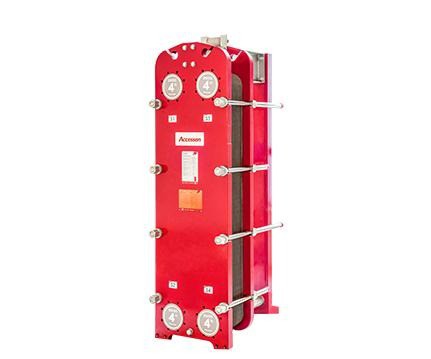
The spiral plate heat exchanger is a high-efficiency, compact, indirect heat exchange device. Its core consists of two parallel metal heat exchange plates rolled together. Spacer columns are installed between the plates to maintain the flow channel spacing and reinforce the plates. The whole device forms two independent, closed, and closely fitted concentric spiral flow channels.The equipment is equipped with a shell, inlet and outlet pipes, sealed end caps and other components. The hot and cold media are separated throughout the flow, and heat transfer is achieved only through the metal plate wall. There is no risk of media mixing. It is suitable for overseas heat exchange scenarios in multiple industries such as chemical, petroleum, food, HVAC, and pharmaceutical.
II. Detailed Explanation: Core Working Principles
1. Medium diversion
Independent channel directional conveying
The hot and cold process media enter their respective dedicated spiral flow channels from the tangential pipes at both ends of the equipment, ensuring that they do not come into contact with or mix with each other throughout the process, thus preventing cross-contamination.The channel spacing can be customized according to the medium's flow rate, viscosity, and pressure. It can be designed with equal spacing or adapted to non-equal spacing according to the working conditions, taking into account the flow requirements of different media and meeting the diverse process parameter requirements of overseas customers.

2. Flow mode
Full counter-current enhanced heat transfer
The equipment adopts a full counter-current flow design, in which the hot and cold media flow in opposite directions along the spiral flow channel, which is the core key to its high heat exchange efficiency.Compared to co-current and cross-current modes, counter-current flow allows the two media to maintain a uniform and large logarithmic mean temperature difference throughout the entire heat exchange process.By maximizing the use of heat transfer driving force, ideal heat exchange effect can be achieved even when dealing with heat exchange media with small temperature differences, greatly improving the thermal energy utilization rate and helping overseas enterprises save energy and reduce consumption.

3. Heat transfer
Indirect heat conduction core
Following Fourier's law of heat conduction, the heat carried by the high-temperature medium is rapidly transferred to the low-temperature medium through the walls of the highly thermally conductive metal heat exchange plate, thus completing the heat exchange.The heat exchange plate wall, as the sole heat transfer medium, is made of materials such as carbon steel, stainless steel, and titanium alloy, which are suitable for different corrosive media conditions. It has stable thermal conductivity, extremely low heat transfer loss, and ensures that the heat exchange efficiency consistently meets the standards.
4. Turbulence enhancement
Breaking the boundary layer reduces thermal resistance
The combined effect of the spiral flow channel's arc-shaped structure and the spaced columns between the plates forces the medium to form a strong turbulent state during flow, effectively disrupting the laminar boundary layer formed when the medium is close to the plate wall (the boundary layer is the main source of thermal resistance in heat transfer).

III. Core Advantages (Meeting the Needs of Overseas Customers)
- Self-cleaning and anti-clogging: High-speed turbulent fluid continuously flushes the plate wall, reducing dirt accumulation, reducing the frequency of downtime cleaning, and adapting to media containing impurities and high viscosity, thus reducing the maintenance costs of overseas equipment.
- Reliable sealing: The non-removable type uses a full end-face welded seal, which has extremely strong sealing performance and no risk of leakage; the removable type has single/dual channels for disassembly and cleaning, and is suitable for media that are prone to scaling and sticky, thus broadening the application scenarios.
- Energy-saving and efficient: The heat transfer coefficient far exceeds that of traditional heat exchangers, and the waste heat recovery efficiency is high, which meets the mainstream demand for energy-saving and low-carbon production in overseas industries and enhances the competitiveness of the project.
If you want to know more about heat exchanger units or are interested in purchasing, please send an email to 9988xiaoshuai@gmail.com, we will reply you in time after seeing the message!
Professional team
Our company is equipped with a high-quality after-sales service team with technical personnel as the core, and will provide timely feedback upon receiving service information notifications from users.
7x24 hours delivery
Our company provides free technical support for the products we sell and organizes technical training for relevant personnel.