


I. Foundational Concepts: Core Definitions and Working Principles of Two Types of Heat Exchangers
product key technologies

Definition and Working Principle of Plate Heat Exchangers
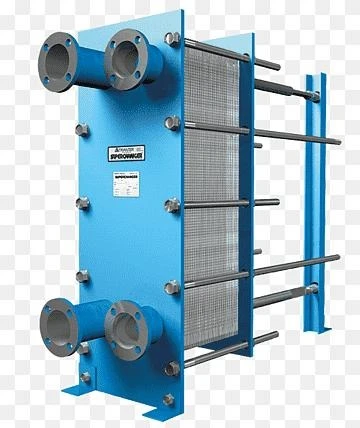
The plate heat exchanger is a compact, high-efficiency heat exchange device. Its core assembly consists of corrugated heat exchange plates (typically made from materials such as stainless steel or titanium alloy), sealing gaskets, a fixed frame, and clamping bolts. During operation, two fluids-one cold and one hot-flow in opposite directions within independent channels situated on either side of the plates. Leveraging the corrugated structure of the plates, the fluids are compelled to generate strong turbulence-thereby disrupting laminar flow-and heat exchange is efficiently accomplished through the high thermal conductivity of the metal plates. Characterized by the absence of fluid intermixing and uniform heat transfer, it stands as a mainstream heat exchange device widely utilized in both industrial and civil applications.
Definition and Working Principle of Coil Heat Exchangers
Coiled heat exchangers-also known as wound-tube heat exchangers-feature a core structure consisting of helical or U-shaped seamless coils. They are categorized into various structural types, including immersion, shell-side, and jacketed configurations. The operating principle involves one fluid circulating within the coils while a second fluid flows through the external shell or chamber surrounding them, facilitating heat transfer through the coil walls. These exchangers are characterized by low fluid flow resistance and unobstructed flow channels; furthermore, their robust and durable construction makes them well-suited for applications involving complex impurities or high-pressure operating conditions.
II. Structural Materials: Differences in the Structure and Core Materials of the Two Heat Exchangers
1 Structural Characteristics of Plate Heat Exchangers
Featuring a fully modular and detachable structure, the unit primarily comprises a fixed plate, a movable plate, heat exchange plates, rubber gaskets, guide rods, and fastening bolts. The plates are arranged in an alternating pattern to form ultra-thin heat exchange channels ranging from 2 to 5 mm; the overall assembly is compact in size and occupies minimal floor space. Furthermore, the design allows for flexible assembly and disassembly, enabling users to freely adjust the heat exchange surface area-by adding or removing plates-to accommodate varying heat exchange capacity requirements.
2 Structural Characteristics of Coil-Type Heat Exchangers
Featuring a fully integrated, fixed structural design, this unit is free of spliced plates or sealing gaskets; its core consists of a coil and shell assembly formed through a continuous winding or bending process. The structure boasts exceptional overall integrity and is devoid of splicing seams, offering superior resistance to vibration and impact. Furthermore, as it contains no fragile sealing components, its structural stability far surpasses that of plate heat exchangers, thereby eliminating the risk of leakage caused by gasket aging.
3 Mainstream Materials for Two Types of Heat Exchangers
Plate Heat Exchangers: The heat exchange plates are typically fabricated from corrosion-resistant materials such as 304 and 316L stainless steel, titanium alloys, and Hastelloy. The sealing gaskets utilize materials such as nitrile rubber, EPDM, and fluororubber, making them suitable for various operating conditions-including those involving ambient temperatures, high temperatures, and corrosive environments.
Coil Heat Exchangers: The coils are predominantly constructed from seamless stainless steel tubing, copper tubing, carbon steel, or titanium tubing. The shell is integrally welded using either carbon steel or stainless steel; this construction ensures high material density, providing exceptional resistance to high pressure and erosion
III. Performance Parameters: Heat Exchange Efficiency, Temperature and Pressure Tolerance, Flow Resistance Comparison

Comparison of Heat Exchange Efficiency
Plate heat exchangers offer superior heat transfer efficiency; their corrugated, turbulence-generating structure significantly boosts the heat transfer coefficient, resulting in an efficiency that is 3 to 5 times higher than that of standard coil-type exchangers. Furthermore, the heat transfer surface area per unit volume is 2 to 5 times greater than that of coil-type units, enabling high-capacity heat exchange within a compact footprint and delivering outstanding energy-saving performance.
Coil-type heat exchangers, conversely, exhibit a relatively moderate level of heat transfer efficiency. The fluid flow within them typically remains in a laminar or weakly turbulent state, resulting in a lower heat transfer coefficient; however, they offer stable and uniform heat exchange, free from issues such as localized overheating or accelerated scaling.
Temperature and pressure tolerance range
Plate heat exchangers: Limited by sealing gaskets, conventional removable types have a temperature resistance ≤180℃ and a pressure resistance ≤2.5MPa; high-temperature and high-pressure models are fine-tunable, but their adaptability to extreme conditions is limited, with the gasket being the core pressure-bearing and temperature-resistant weakness.
Coil heat exchangers: Without gasket limitations, their integral welded structure offers excellent temperature and pressure resistance, making them suitable for high-temperature conditions above 300℃ and high-pressure conditions above 10MPa. Their adaptability to extreme conditions far exceeds that of plate heat exchangers.

IV. Advantages and Disadvantages: Summary of the core strengths and weaknesses of the two products
1 Core Advantages of Plate Heat Exchangers
1. High efficiency and energy saving: High heat exchange efficiency and extremely low heat loss, resulting in low energy costs during long-term operation;
2. Compact size: Occupies only 1/5 to 1/8 the space of traditional tubular equipment, saving installation space and suitable for constrained environments such as containers and small computer rooms;
3. Flexible and adjustable: Plates can be added or removed as needed to quickly adjust heat exchange power and adapt to upgrades and modifications;
4. Easy disassembly and assembly: Modular structure, simple disassembly, thorough cleaning and maintenance, and high hygiene standards.
2 Main disadvantages of plate heat exchangers
1. Limited Operating Conditions: Overall temperature and pressure resistance is relatively weak, with a limited pressure and temperature range, making it unsuitable for harsh production environments such as high-temperature and high-pressure applications, significantly restricting its application scope.
2. Prone to Clogging: The internal flow channels are narrow, making them susceptible to blockage when the medium contains solid impurities, is viscous, or contains fibrous components, thus affecting normal heat exchange efficiency.
3. Consumable Parts: The sealing gaskets are consumable components that will gradually age and fail under the influence of the medium and environment over time, leading to leakage problems. Regular inspection and replacement are required, resulting in ongoing maintenance costs.
simulator
1. Wide adaptability: High temperature, high pressure, corrosion, and vibration resistant, suitable for chemical, heavy industry, and high-temperature, high-pressure environments;
2. Strong anti-clogging performance: Good flowability, capable of handling fluids containing particles, sewage, and viscous fluids, with a wider range of applicable media;
3. High stability: One-piece welded structure, eliminating the risk of gasket leakage, providing extremely strong sealing;
4. Long service life: No easily damaged parts, wear-resistant and erosion-resistant, with an extremely low failure rate during long-term operation.
If you want to know more about heat exchanger units or are interested in purchasing, please send an email to 9988xiaoshuai@gmail.com, we will reply you in time after seeing the message!
Professional team
Our company is equipped with a high-quality after-sales service team with technical personnel as the core, and will provide timely feedback upon receiving service information notifications from users.
7x24 hours delivery
Our company provides free technical support for the products we sell and organizes technical training for relevant personnel.
